
 By Alex Morgan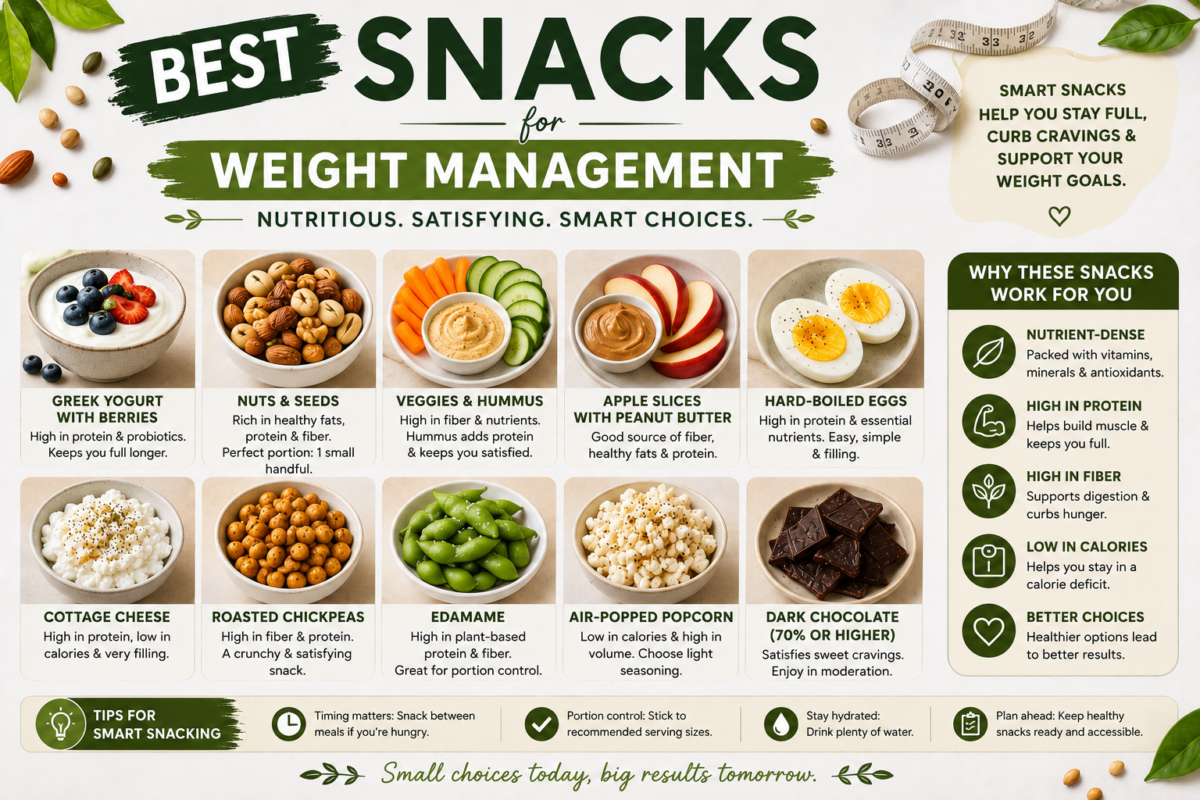
Last updated: September 7, 2026
My Experience:
Best Snacks for Weight Management: Snacking is one of the most common areas where weight management efforts break down. Many people either skip snacks entirely and become overly hungry, or they choose options that taste good in the moment but leave them unsatisfied and looking for more food shortly afterward.
The right snacks can do the opposite: they help control hunger, stabilize energy, and make it easier to stick to a overall eating pattern that supports weight management. This guide focuses on practical, realistic snacks that prioritize fullness, convenience, and sustainability rather than perfection.
How Snacks Affect Weight Management
Not all snacks have the same impact. The difference usually comes down to three factors:
- Satiety – How full the snack makes you feel
- Calorie density – How many calories you get relative to volume
- Blood sugar response – Whether the snack leads to a quick rise and crash or steadier energy
Snacks higher in protein and fiber generally perform better on all three measures than snacks made mostly of refined carbohydrates and sugar.
Key Principles for Weight-Management Snacks
Before listing specific foods, these principles matter more than any single product:
- Prioritize protein and/or fiber
- Control portions in advance
- Choose snacks you actually enjoy
- Avoid waiting until you are extremely hungry
- Keep options visible and easy to grab
- Focus on consistency over perfection
Best Snacks for Weight Management (Detailed List)
1. Greek Yogurt (Plain)
High in protein and very filling for the calories. A single-serve container typically provides 15–20g of protein.
How to use it well:
- Choose plain to avoid added sugar
- Add cinnamon, berries, or a few nuts if desired
- Keep single-serve cups ready in the fridge
2. Hard-Boiled Eggs
One of the most effective high-protein, low-effort snacks. Two eggs provide solid protein and keep hunger away longer than most carb-based options.
Tip: Prepare a batch at the start of the week so they are ready to grab.
3. Apple or Pear with a Measured Amount of Nut Butter
The fiber from the fruit combined with a small amount of fat and protein from nut butter creates better staying power than fruit alone.
Important: Measure the nut butter (usually 1 tablespoon) instead of eating from the jar.
4. Cottage Cheese
High in protein and very satiating. A half-cup serving is often enough when paired with vegetables or a small amount of fruit.
5. Vegetable Sticks with Hummus
High volume, low calorie density, and more satisfying than vegetables alone because of the added protein and fat in hummus.
Good vegetables include carrots, cucumbers, bell peppers, and celery.
6. Roasted Chickpeas
Crunchy, higher in protein and fiber than chips, and useful when you want a savory snack. They help satisfy the desire for something crispy.
7. A Handful of Nuts (Pre-Portioned)
Nuts are nutritious and filling, but they are easy to overeat. Pre-portioning about 1 ounce (28g) solves most of the problem.
Almonds, pistachios, and walnuts are all solid choices.
8. Turkey or Lean Deli Meat Roll-Ups
High in protein and very low in carbohydrates. Wrap turkey around a cucumber spear or a cheese stick for a simple, effective snack.
9. Air-Popped Popcorn
A high-volume snack that can feel substantial for relatively few calories when prepared without heavy butter or excessive oil. Season with spices instead of sugar.
10. Protein Shake (Simple Version)
Useful when you need something fast. A basic protein powder mixed with water or unsweetened milk alternative can work well. Avoid turning it into a high-calorie blended drink with multiple add-ins.
11. Edamame
Shelled edamame provides plant-based protein and fiber. Lightly salted versions are convenient and satisfying.
12. Cheese Sticks with Vegetables or Fruit
Portion-controlled cheese paired with high-volume produce creates a balanced snack that is easy to prepare.
Snacks That Often Work Against Weight Management
These are not “bad,” but they tend to be less helpful when the goal is managing hunger and calories:
- Sugary granola bars
- Flavored yogurts high in added sugar
- Large bags of trail mix or nuts
- Pretzels, crackers, and rice cakes eaten alone
- Candy, pastries, and sweet baked goods
- Fruit juice and large sweetened smoothies
These options can fit occasionally, but they usually don’t provide strong satiety relative to their calories.
How to Build a Practical Snack System
A system beats willpower.
1. Choose 3–4 core snacks you like and can keep available.
2. Prepare or portion them in advance.
3. Schedule approximate snack times (for example, mid-morning and mid-afternoon).
4. Keep emergency options at work or in your bag.
Example simple rotation:
- Mid-morning: Greek yogurt or hard-boiled eggs
- Mid-afternoon: Apple with nut butter or vegetables with hummus
Portion Control Strategies That Actually Work
- Use small containers
- Buy single-serve packs when helpful
- Avoid eating directly from large bags
- Pair calorie-dense foods (nuts, nut butter) with high-volume foods (fruit, vegetables)
- Pre-log or pre-decide snacks if you find free eating difficult
Sample Weight-Management Snack Frameworks
1. Framework A (Higher Protein)
- Morning: Greek yogurt
- Afternoon: Turkey roll-ups or cottage cheese
2. Framework B (Higher Volume)
- Morning: Apple + small amount of nut butter
- Afternoon: Large portion of vegetables + hummus
3. Framework C (Mixed)
- Morning: Hard-boiled eggs
- Afternoon: Roasted chickpeas or edamame
Common Mistakes
- Choosing snacks that are “healthy” but not filling
- Under-eating earlier in the day and overeating later
- Relying only on fruit
- Treating packaged “diet” snacks as automatically better
- Ignoring protein
Frequently Asked Questions
How many snacks should I eat per day? Most people do well with 1–2 planned snacks, depending on meal timing and activity level.
Should I avoid snacking completely to lose weight? Not necessarily. For many people, planned snacks prevent larger overeating later.
Are protein bars good for weight management? Some are acceptable. Choose carefully and treat them as convenience tools rather than everyday staples.
Is fruit a good snack for weight management? Fruit is fine, especially when paired with protein or fat. Alone, it may not keep you full long enough.
What if I’m still hungry after a snack? Check whether the snack had enough protein or fiber, and whether your main meals are adequate.
Final Thoughts
The best snacks for weight management are not the lowest-calorie options available. They are the ones that keep you full, are easy to repeat, and fit realistically into your day.
Focus on protein, fiber, portion control, and consistency. A small number of reliable snacks used regularly will almost always outperform a long list of complicated or highly restrictive ideas.
Start with two or three options from this list, make them easy to access, and adjust based on how satisfied you feel.