
 By Alex Morgan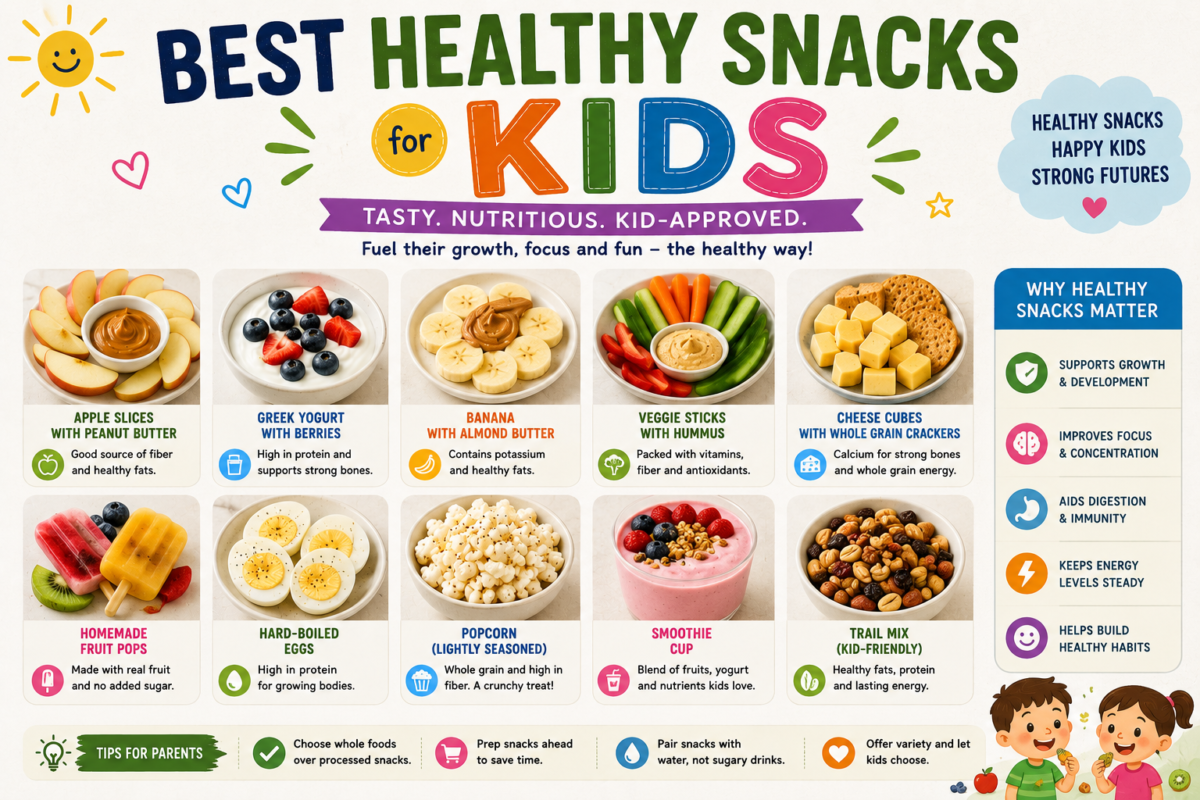
Last updated: September 7, 2026
My Experience:
Best Healthy Snacks for Kids: Feeding kids nutritious snacks sounds simple until you face real life: picky preferences, busy schedules, school rules, and the constant competition from brightly packaged, high-sugar products. Many parents end up stuck between what they want their children to eat and what their children will actually accept.
The goal of this guide is not perfection. It is to give you a realistic set of healthy snacks for kids that balance nutrition, convenience, and likability. These options focus on better everyday choices that support steady energy, growth, and fewer sugar-driven mood swings.
What Makes a Snack “Healthy” for Kids?
A good snack for children generally includes one or more of the following:
- Some protein
- Fiber from fruit, vegetables, or whole grains
- Healthy fats in moderate amounts
- Limited added sugar
- A form and flavor kids are willing to eat
It does not need to be gourmet or complicated. Consistency matters more than ideal composition at every single eating occasion.
Core Principles for Feeding Kids Snacks
- Offer structure – Predictable snack times reduce constant grazing.
- Provide limited choices – Two good options work better than an open pantry.
- Pair foods – Combining food groups improves nutrition and satisfaction.
- Keep preparation realistic – The best snack is one you can actually make or pack.
- Stay flexible – Some days will be better than others.
Best Healthy Snacks for Kids (Detailed Options)
1. Apple Slices with Nut Butter
A classic that works for many children. The natural sweetness of the apple combined with a small amount of peanut or almond butter makes it more satisfying than fruit alone.
Tips:
- Cut the apple just before serving to prevent browning, or toss with a little lemon juice
- Use a measured amount of nut butter
- For schools with nut restrictions, try sunflower seed butter
2. Cheese Sticks or Cheese Cubes
Most kids accept cheese readily. It provides protein and calcium and requires no preparation.
Make it more complete: Serve with fruit or a few whole-grain crackers.
3. Yogurt (Lower-Sugar Options)
Yogurt can be an excellent snack when sugar content is controlled. Greek yogurt offers more protein.
Ideas:
- Plain yogurt mixed with fresh fruit
- A small drizzle of honey for older children
- Avoid brands that are closer to dessert than snack
4. Vegetable Sticks with Hummus
Carrots, cucumbers, and bell peppers become much more appealing with a dip. Hummus adds plant-based protein and flavor.
Tip: Pre-cut vegetables at the beginning of the week so they are ready to grab.
5. Banana with Nut Butter or a Small Handful of Nuts
Easy to pack and naturally sweet. For younger children, spread nut butter thinly rather than offering whole nuts if choking is a concern.
6. Hard-Boiled Eggs
A simple protein source. Some children like them plain; others prefer them cut into halves or paired with a little salt or fruit on the side.
7. Whole-Grain Crackers with Cheese or Turkey
This combination creates a more balanced mini-meal style snack. Choose crackers with simpler ingredients when possible.
8. Roasted Chickpeas
Crunchy and more interesting than many parents expect. They provide fiber and plant protein and can be seasoned mildly.
9. Fresh Berries or Mixed Fruit
Berries, grapes (cut for younger kids), melon, and orange slices are easy wins. Presentation matters — small containers or colorful mixes often increase acceptance.
10. Smoothies (Simple Homemade Versions)
Blend yogurt or milk with fruit. You can add a small handful of spinach or a spoonful of nut butter without strongly affecting taste.
Keep it simple: Avoid turning smoothies into large sugar-heavy drinks.
11. Cottage Cheese with Fruit
Higher in protein than many other dairy snacks. Mixing in pineapple, berries, or peaches can improve acceptance.
12. Turkey or Chicken Roll-Ups
A slice of turkey wrapped around a cheese stick or cucumber spear is easy to eat and higher in protein than most packaged snacks.
Snacks to Limit for Everyday Use
These can appear occasionally, but they work poorly as regular snacks:
- Candy and chocolate
- Sugary granola bars
- Fruit snacks that are mostly sugar
- Regular chips and cheese puffs
- Juice (including 100% juice in large amounts)
- Sweetened yogurt pouches that function like dessert
Using these foods as defaults makes it harder for kids to appreciate simpler options.
Age-Based Considerations
Toddlers and younger children:
- Focus on soft textures and safe shapes
- Cut grapes, cherry tomatoes, and similar foods appropriately
- Emphasize routine and repeated exposure
School-age children:
- Involve them in choosing between two options
- Teach basic label awareness over time
- Pack snacks that survive a backpack and room temperature when needed
Tweens and teens:
- Higher protein becomes more useful
- Keep convenient options visible at home
- Teach them to assemble simple snacks themselves
Practical Preparation Strategies
- Wash and cut fruit and vegetables once or twice a week
- Keep cheese sticks and yogurt at the front of the fridge
- Portion nuts or crackers into small containers
- Maintain a short list of default snacks everyone recognizes
- Use a “snack box” in the fridge with ready options
Sample Daily Snack Ideas for Kids
After-school snack ideas:
- Apple + cheese stick
- Yogurt + berries
- Carrots + hummus
- Banana + peanut butter
- Turkey roll-up + cucumber
Lighter options:
- A small handful of berries
- A cheese stick
- A few whole-grain crackers
Dealing with Resistance
- Continue offering without pressure
- Serve new foods alongside familiar ones
- Avoid turning snacks into negotiations
- Model eating the same foods when possible
- Remember that repeated exposure often matters more than a single tasting
Frequently Asked Questions
How many snacks do kids need? Most school-age children do well with one afternoon snack, and sometimes a smaller morning snack depending on schedule and activity level.
What if my child only wants packaged snacks? Gradually introduce better packaged options and pair them with simple whole foods. Change works better in steps than all at once.
Are organic snacks necessary? Not required. Focus first on overall pattern: more protein, more fruit and vegetables, less added sugar.
How do I handle school nut bans? Use sunflower seed butter, cheese, yogurt, fruit, roasted chickpeas, and turkey roll-ups as alternatives.
Is it okay to use some packaged snacks? Yes. The goal is better defaults, not eliminating every convenient product.
Final Thoughts
The best healthy snacks for kids are the ones that get eaten and that you can provide with reasonable effort. You do not need a perfect menu every day. Aim for a short rotation of reliable options that include fruit or vegetables, some protein, and limited added sugar.
Start with two or three ideas from this list that your child already accepts, then slowly expand. Small, repeated improvements create better long-term habits than occasional ideal days.