
 By Alex Morgan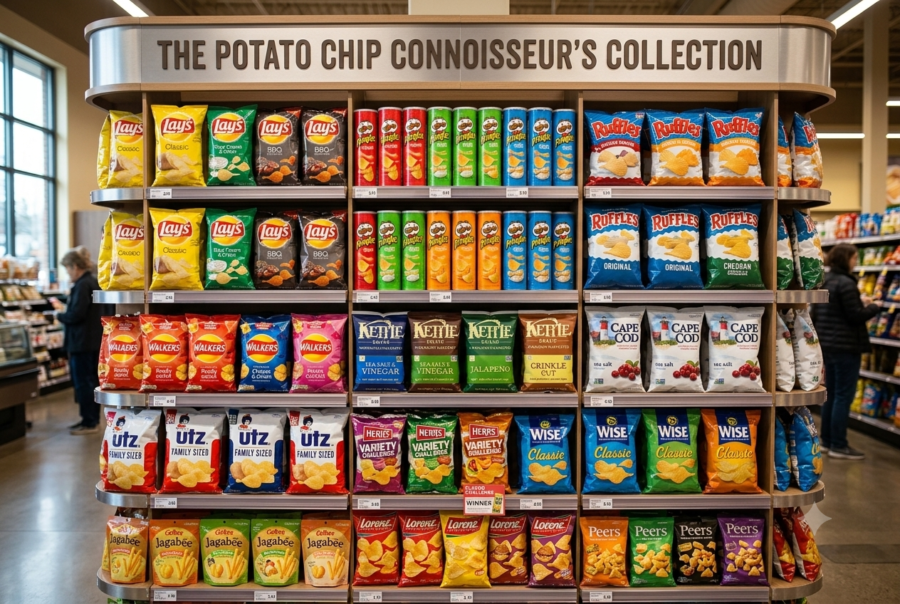
Last updated: September 7, 2026
My Experience:
Potato snacks remain one of the most universally loved packaged foods on the planet. From classic salted chips to bold flavored crisps, they appear in lunchboxes, office drawers, parties, and late-night cravings across almost every continent.
While the basic idea — thinly sliced or formed potatoes, fried or baked, and seasoned — is simple, the brands that dominate this category have built enormous global recognition through consistency, flavor innovation, marketing power, and distribution strength.
This guide ranks and explores the 11 most popular potato snacks brands in the world. The ranking considers brand recognition, global availability, cultural impact, product range, and sustained consumer popularity rather than short-term sales spikes alone.
Whether you are a casual snacker, a curious food enthusiast, or someone researching the snack industry, this article gives you a clear and detailed overview of the brands that define the category.
How These Brands Were Selected
To keep this list useful and transparent, the brands were evaluated using these practical criteria:
- Global or multi-regional brand recognition
- Longevity and consistency in the market
- Width of product range (classic + innovative flavors)
- Cultural presence and consumer familiarity
- Distribution strength across countries
- Reputation for taste and quality within the potato snack category
Note: Some well-known snack brands that primarily focus on corn, tortilla, or extruded snacks were excluded so the list stays focused on potato-based products.
1. Lay’s
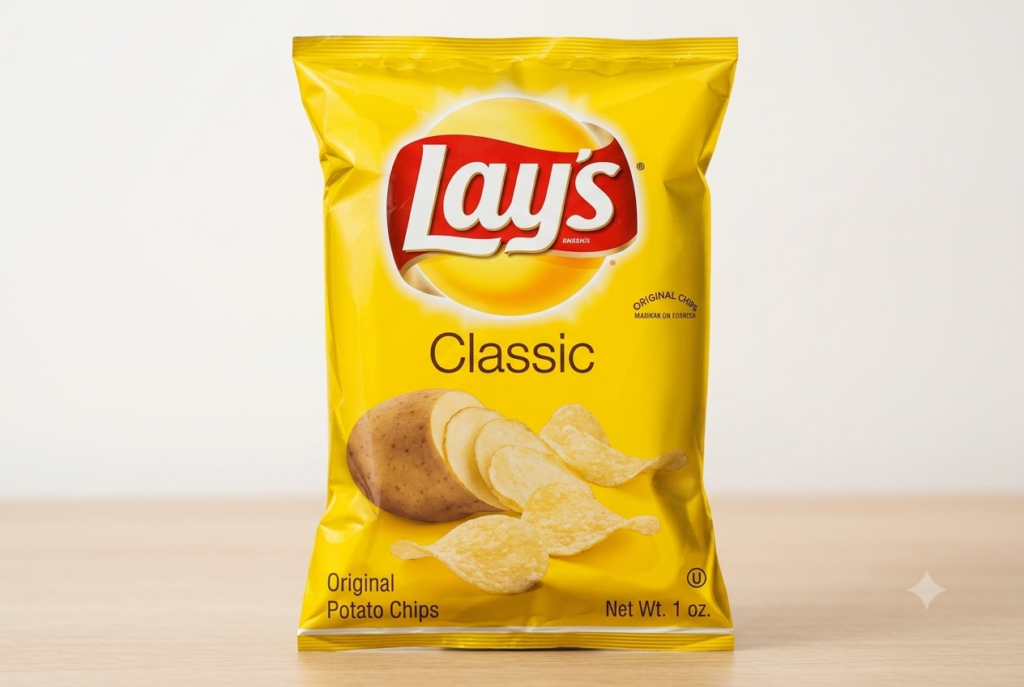
Parent: PepsiCo Founded: 1932 (Herman Lay)
Parent Company: PepsiCo Headquarters: United States (global presence)
History Herman W. Lay began selling potato chips in the American South in the 1930s. The brand grew through acquisitions and strong distribution, eventually merging into what became Frito-Lay and later PepsiCo. International expansion turned Lay’s into the world’s most recognized potato chip brand, often adapted with local names and flavors (e.g., Walkers in the UK, Sabritas in Mexico).
Review Lay’s delivers reliable crunch, consistent seasoning, and broad flavor variety. Classic salted remains the benchmark for many consumers. The brand’s greatest strength is availability and familiarity rather than artisanal texture. Limited editions and regional flavors keep the line interesting.
Position Global volume and awareness leader.
Lay’s is widely regarded as the most recognized potato chip brand in the world. Originally founded as a regional American brand, it expanded globally under PepsiCo and now appears in dozens of countries with both international classics and local flavor adaptations.
Why Lay’s dominates:
- Extremely wide distribution
- Strong brand consistency
- Local flavor innovation in many markets
- Massive marketing support
Popular variants include Classic, Sour Cream & Onion, Barbecue, Salt & Vinegar, and countless regional exclusives. In many countries, Lay’s has become the default name people associate with potato chips.
Key Strengths: Global scale, flavor localization, and unmatched shelf presence.
2. Pringles

Parent: Kellanova Introduced: 1968 (Procter & Gamble)
Parent Company: Kellanova (formerly Kellogg’s) Known for: Stackable, uniform potato-based crisps
History Pringles was developed by Procter & Gamble as a solution to broken chips and bag inefficiency. The saddle-shaped, stackable crisp made from a potato-based dough became iconic. The brand later moved to Kellogg’s and is now under Kellanova. Its tube packaging remains one of the most distinctive in the snack aisle.
Review Pringles offers uniform texture and controlled seasoning delivery. The experience is different from traditional sliced chips — denser and more engineered — but highly consistent. Flavor range is extensive and often bold. Ideal for sharing and portion control.
Position Strong global brand with unique format advantage.
Pringles occupies a unique position. Unlike traditional sliced potato chips, Pringles are made from a dough that includes potato flakes and other ingredients, then pressed into their signature shape and stacked in a tube.
This design solved two classic chip problems: breakage and bag air. The result is a highly distinctive product with a loyal following.
Why Pringles ranks high:
- Iconic packaging
- Consistent texture and shape
- Strong international availability
- Broad flavor range
Pringles proved that potato snacks could be engineered for convenience and still deliver strong taste appeal.
3. Ruffles

Parent Company: PepsiCo Known for: Deep ridges and extra crunch
History Ruffles was developed to create a sturdier chip that could handle dips. The ridged design became its signature and helped the brand carve a distinct identity within the PepsiCo snack portfolio.
Review Excellent structural integrity and superior dip performance. The deeper ridges hold seasoning well and deliver a louder crunch. Best suited for consumers who prefer a more robust chip experience.
Position Leading ridged potato chip brand in key markets, especially North America.
Ruffles stands out for its ridged texture, which gives the chips more structural strength and a louder crunch. The ridges also hold seasoning and dips particularly well, making the brand a favorite for party settings.
Notable strengths:
- Excellent dip performance
- Distinctive texture
- Strong presence in North America and selected international markets
Ruffles often sits alongside Lay’s in the same corporate family but maintains a clearly differentiated identity.
4. Walkers
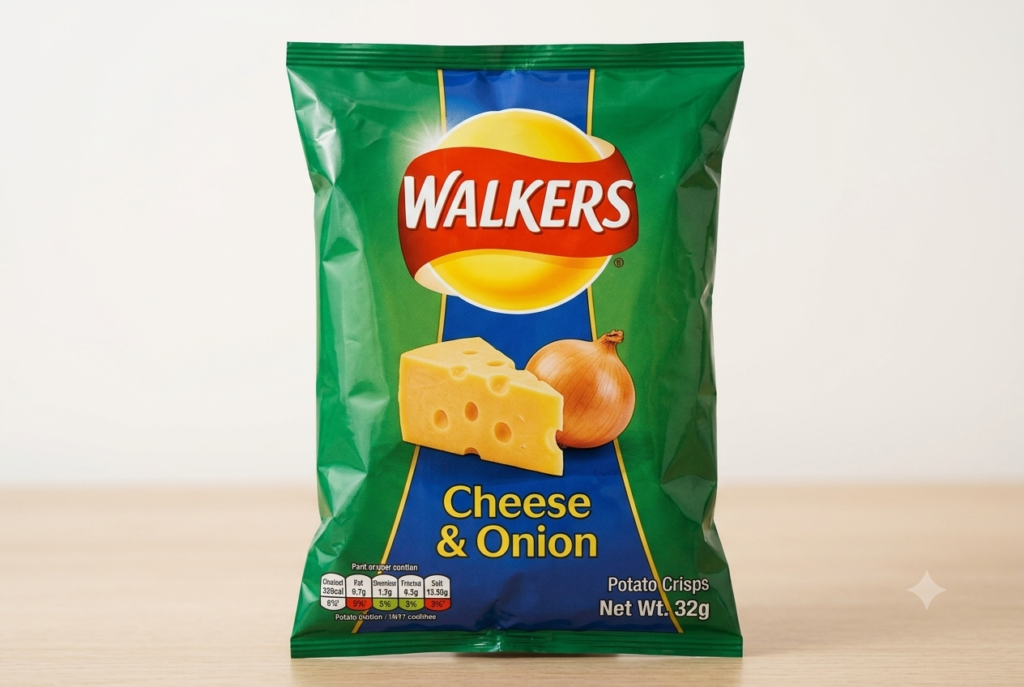
Parent Company: PepsiCo Primary Market: United Kingdom and Ireland
History Walkers began in Leicester and became the dominant British crisp brand long before PepsiCo ownership. When PepsiCo acquired it, the company wisely kept the Walkers name because of its deep cultural attachment in the UK and Ireland.
Review Walkers chips are closely aligned with British taste preferences. Cheese & Onion and Salt & Vinegar remain iconic. Texture is consistent with the broader Lay’s family, but the flavor execution feels tailored to local expectations. Market leadership in the UK is very strong.
Position Clear leader in the UK crisp market.
Walkers is the dominant potato crisp brand in the UK. While it shares corporate ownership with Lay’s, Walkers maintains a strong local identity and flavor lineup tailored to British tastes.
Signature flavors such as Cheese & Onion, Salt & Vinegar, and Prawn Cocktail are culturally embedded in the UK snacking landscape.
Why Walkers matters:
- Market leadership in the UK
- Strong emotional brand connection
- Consistent quality and wide availability
For many British consumers, Walkers is not just a chip brand — it is part of everyday life.
5. Kettle Brand
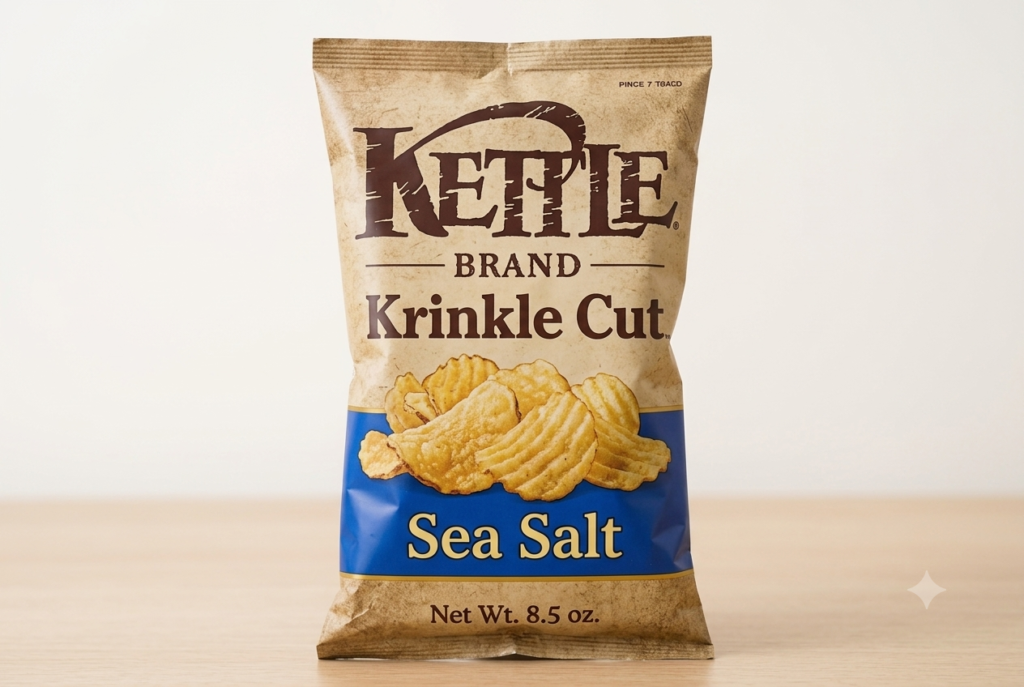
Known for: Kettle-cooked style and premium positioning
Style: Kettle-cooked
History Kettle Brand helped popularize batch-cooked, thicker potato chips that deliver a harder crunch and more pronounced potato flavor. It positioned itself in the premium segment relative to standard continuous-fried chips.
Review Noticeably denser and crunchier than standard Lay’s-style chips. Flavor often feels more robust. Appeals to consumers seeking a more substantial snack experience. Price point is usually higher.
Position Strong premium / kettle-cooked player.
Kettle Brand helped popularize the thicker, crunchier “kettle-cooked” style of potato chips. These chips are cooked in batches, which creates a denser texture and more pronounced potato flavor compared with continuous-fried standard chips.
Key appeal:
- Heartier crunch
- Higher-quality ingredient perception
- Strong presence in natural and premium snack aisles
Kettle Brand attracts consumers willing to pay more for a more substantial chip experience.
6. Cape Cod
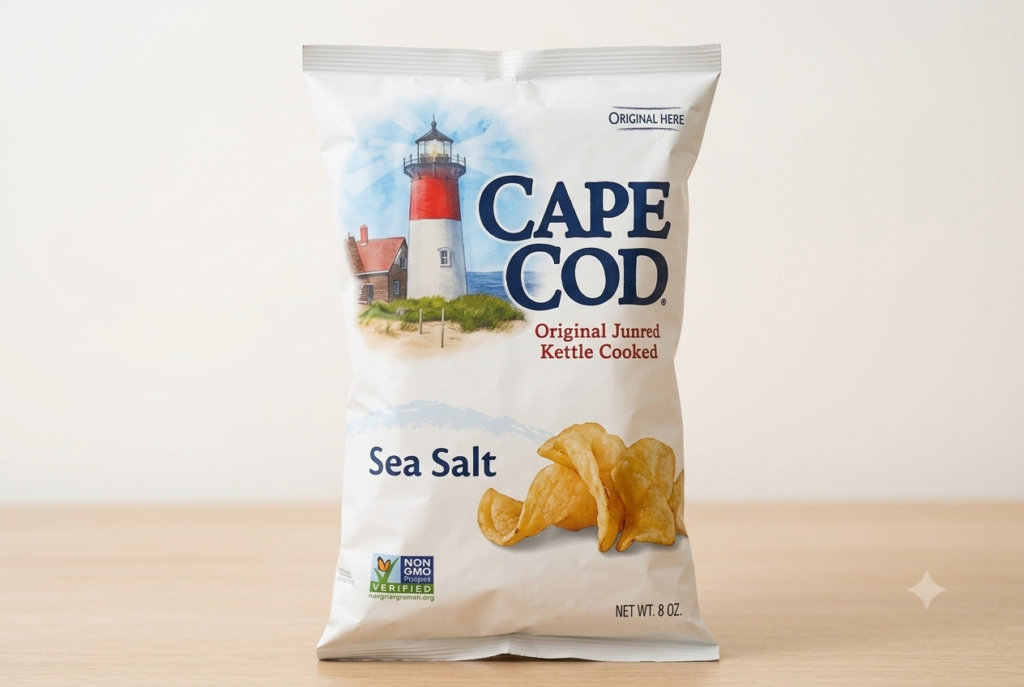
Known for: Kettle-cooked chips with a clean, recognisable brand image
Style: Kettle-cooked
History Cape Cod built its identity around kettle-cooked chips and clean, coastal-inspired branding. It established a reputation for consistent quality in the thicker-chip segment.
Review Reliable kettle crunch with relatively straightforward seasoning approaches. Sits comfortably in the premium everyday category. Less about extreme flavors and more about texture and simple taste.
Position Respected kettle-cooked brand, primarily strong in North America.
Cape Cod built its reputation on kettle-cooked potato chips with a relatively straightforward seasoning approach and coastal-inspired branding. The brand is especially known in North America for delivering consistent crunch and a slightly more “premium everyday” feel.
Strengths:
- Strong texture
- Clean brand identity
- Loyal regional and national following
7. Utz

Primary Market: United States (strong regional-to-national presence)
Base: United States
History Utz grew from a regional family business into one of the larger non-PepsiCo players in the U.S. potato chip market through steady expansion and acquisitions.
Review Solid everyday chips with a wide range of flavors. Competes as a strong alternative to the largest national brands, often with competitive pricing and good supermarket presence.
Position Major U.S. challenger brand.
Utz is one of the largest independently rooted family-style snack companies in the U.S. potato chip space. It offers a wide range of classic and flavored chips and has expanded significantly through distribution and acquisitions.
Why Utz is important:
- Broad product portfolio
- Strong supermarket presence
- Competitive alternative to the largest national brands
Utz represents the power of regional brands that successfully scale.
8. Herr’s

Known for: Wide flavor variety and Mid-Atlantic U.S. roots
Base: United States (Mid-Atlantic roots)
History Herr’s developed a loyal following through regional strength and willingness to experiment with flavors while maintaining a broad snack portfolio.
Review Known for variety and value. Texture and seasoning are generally crowd-pleasing rather than premium-positioned. Strong in its core markets.
Position Established regional-to-national U.S. brand.
Herr’s has built a solid reputation through flavor experimentation and strong regional loyalty. While not as globally dominant as Lay’s or Pringles, it remains a meaningful player in the broader potato snack landscape.
Notable traits:
- Bold flavor options
- Consistent presence in many U.S. markets
- Diversified snack portfolio
9. Wise

Known for: Classic American potato chips and long history
Base: United States
History One of the older American potato chip names, Wise has long heritage in the category and continues to maintain recognition in certain regions.
Review Traditional chip style with familiar flavors. Appeals to consumers who prefer classic, no-fuss potato chips. Less emphasis on premium or experimental positioning.
Position Heritage brand with steady regional presence.
Wise is one of the older names in American potato chips and continues to maintain recognition, especially in certain regions. Its positioning is often more traditional, focusing on familiar chip styles and flavors.
Role in the market:
- Heritage brand value
- Reliable everyday option
- Established distribution in key areas
10. Calbee
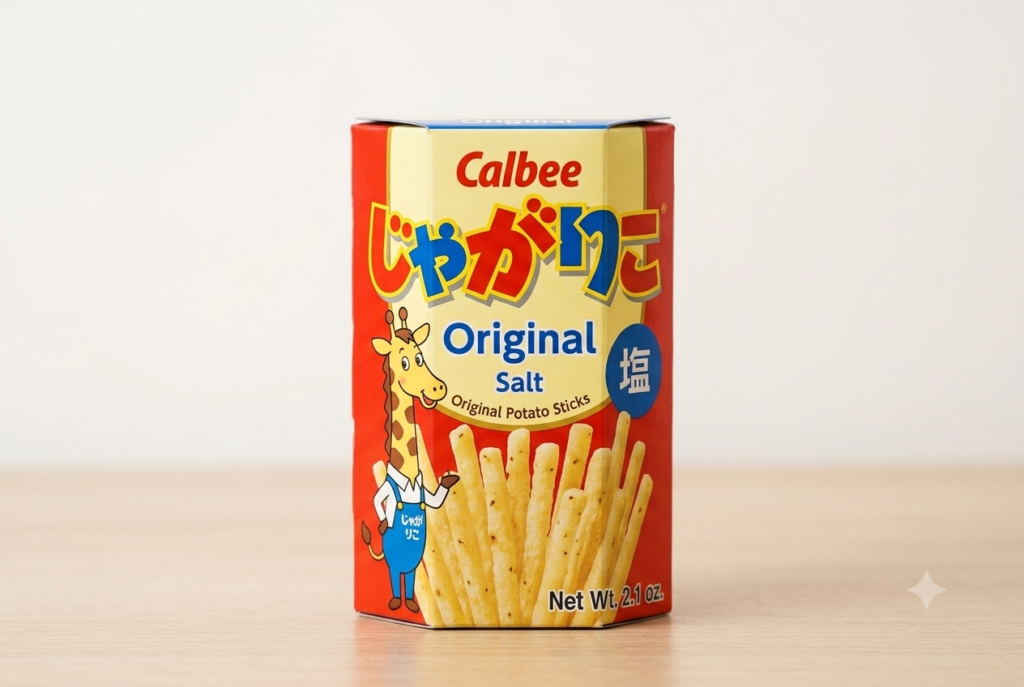
Primary Market: Japan (with international expansion)
Base: Japan International presence: Growing
History Calbee is one of Asia’s leading snack companies and a major force in potato-based snacks. It has a strong culture of product innovation and has expanded distribution beyond Japan.
Review Often more innovative in texture and seasoning than many Western counterparts. Quality is typically high, and product development feels distinctive. Appeals to consumers looking for something beyond standard Western-style chips.
Position Dominant in Japan; increasingly relevant internationally.
Calbee is one of Asia’s most important snack companies and a major force in potato-based snacks. While some of its products differ in style from Western-style chips, its potato snacks are extremely popular in Japan and increasingly available in international markets.
Why Calbee belongs on this list:
- Dominant position in Japan
- Strong innovation culture
- Growing global footprint
Calbee demonstrates that global potato snack popularity is not limited to Western brands.
11. Lorenz / Other Strong Regional Leaders

Example: Lorenz (Germany and nearby markets)
History European markets feature powerful national and regional potato snack brands that command significant loyalty even without the same global advertising scale as Lay’s or Pringles.
Review These brands often excel in local flavor preferences and maintain high standards of quality within their home markets. They illustrate that global popularity and local dominance are not always the same thing.
Position Important regional leaders.
In Europe and other regions, brands such as Lorenz (Germany and surrounding markets) and various strong national players hold significant popularity. These brands may not always have the same global advertising presence as Lay’s or Pringles, but they command deep loyalty and substantial market share in their home territories.
Including this type of brand acknowledges an important reality: potato snack popularity is both global and local.
Brand Comparison Table
| Brand | Style | Global Strength | Texture Profile | Best For | Price Positioning |
|---|---|---|---|---|---|
| Lay’s | Traditional | Very High | Light–medium crunch | Everyday snacking | Mainstream |
| Pringles | Formed/stackable | Very High | Uniform, dense | Convenience & sharing | Mainstream |
| Ruffles | Ridged | High | Robust crunch | Dips & bold texture | Mainstream |
| Walkers | Traditional | High (UK) | Light–medium | UK taste preferences | Mainstream |
| Kettle Brand | Kettle-cooked | Medium–High | Thick, hard crunch | Premium texture seekers | Premium |
| Cape Cod | Kettle-cooked | Medium | Thick crunch | Simple premium chips | Premium |
| Utz | Traditional | Medium | Standard | Value & variety | Mainstream |
| Herr’s | Traditional | Medium | Standard | Flavor variety | Mainstream |
| Wise | Traditional | Medium | Classic | Traditional taste | Mainstream |
| Calbee | Varied | Medium–High | Innovative | Unique textures/flavors | Mid–Premium |
| Lorenz & peers | Traditional/local | Medium | Market-dependent | Local preference | Mainstream–Mid |
Market Share & Competitive Landscape Notes
- PepsiCo (Lay’s, Ruffles, Walkers and related brands) holds the strongest overall position in branded potato chips globally.
- Pringles maintains a powerful independent identity through format differentiation.
- Premium kettle-cooked brands capture higher margins but smaller overall volume than the mass-market leaders.
- Regional brands remain highly competitive in their home markets and limit full global consolidation.
Exact share figures fluctuate by country and year, but the hierarchy of brand power is relatively stable: Lay’s family at the top, Pringles as the clearest global alternative format, followed by strong regional and premium players.
Expected Growth Outlook – Remainder of 2026
For the rest of 2026, the potato chips category is expected to show:
- Steady mid-single-digit value growth in most forecasts
- Continued strength in flavored products
- Ongoing premiumization (kettle-cooked and specialty lines)
- Faster relative growth in Asia-Pacific
- Stable but mature performance in North America and Western Europe
Risks include consumer sensitivity to price increases and competition from other snack formats. Opportunities lie in localized flavors, convenient packaging, and moderate “better-for-you” innovation that does not sacrifice taste.
What Makes a Potato Snack Brand Successful?
Across the brands above, several patterns appear repeatedly:
- Consistency of taste and texture
- Strong packaging recognition
- Ability to innovate without losing the core product
- Distribution power
- Emotional or cultural connection in key markets
The most successful brands protect their core offering while still introducing new flavors and formats that keep consumers interested.
Regional Differences in Potato Snack Preferences
- North America: Classic salted, barbecue, sour cream & onion, and ridged chips perform strongly.
- United Kingdom: Cheese & onion and salt & vinegar hold iconic status.
- Europe: Both traditional chips and specialty local flavors matter.
- Asia: Innovation, unique seasonings, and alternative potato snack formats are highly influential.
Understanding these differences helps explain why certain brands lead globally while others dominate specific countries.
Health and Consumer Trends Affecting the Category
Modern consumers still love potato snacks, but many also look for:
- Reduced-fat or baked options
- Simpler ingredient lists
- Sea salt and less aggressive seasoning
- Shareable but controlled portion packaging
Major brands have responded with baked lines, kettle-cooked ranges, and lighter seasoning variants while protecting their core fried products.
Frequently Asked Questions
Which potato snack brand is the most popular in the world? Lay’s is generally considered the most globally recognized and widely distributed potato chip brand.
Are Pringles real potato chips? Pringles are potato-based crisps made from a dough that includes potato content. They are different from traditional sliced potato chips but still belong to the broader potato snack category.
Why do some countries have different leading brands? Local taste preferences, history, distribution networks, and cultural attachment all influence which brand leads in a given market.
Is kettle-cooked better than regular chips? It depends on preference. Kettle-cooked chips are usually thicker and crunchier, while regular chips are lighter and more delicate.
Do these brands offer healthier options? Many now offer baked, reduced-fat, or simply seasoned versions, although traditional fried chips remain their core products.
Final Thoughts
The global potato snack market is led by a mix of massive international brands and strong regional players. Lay’s currently stands as the clearest global leader, while Pringles, Ruffles, Walkers, and several premium or regional brands maintain powerful positions through differentiation and loyalty.
What unites these brands is their ability to turn a simple product into something memorable — through texture, flavor, packaging, and consistent availability.
Potato snacks continue to evolve, but the core pleasure remains the same: a crisp, satisfying bite that works almost anywhere, at any time.
Disclaimer: This article is for informational and educational purposes only. Market figures are drawn from publicly available industry estimates and may vary by source. Brand mentions do not imply endorsement or affiliation.